
A Superb Old Fijian War Club Viti Lavu Islands Fiji Islands Polynesia from the19th Century
Enquire About This Artworks >
| Collection No. | T-5707 |
|---|---|
| Size | Length 107cm |
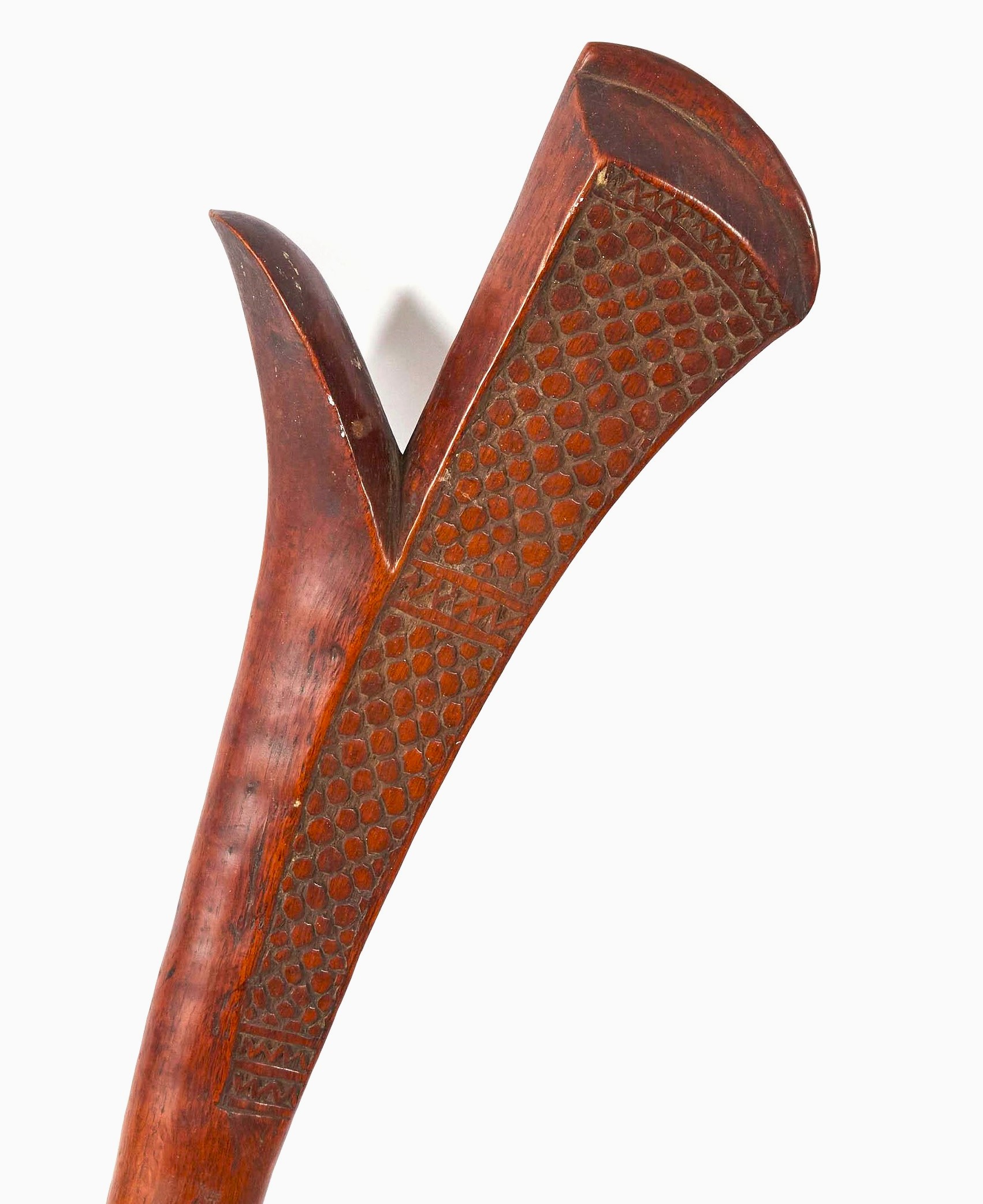
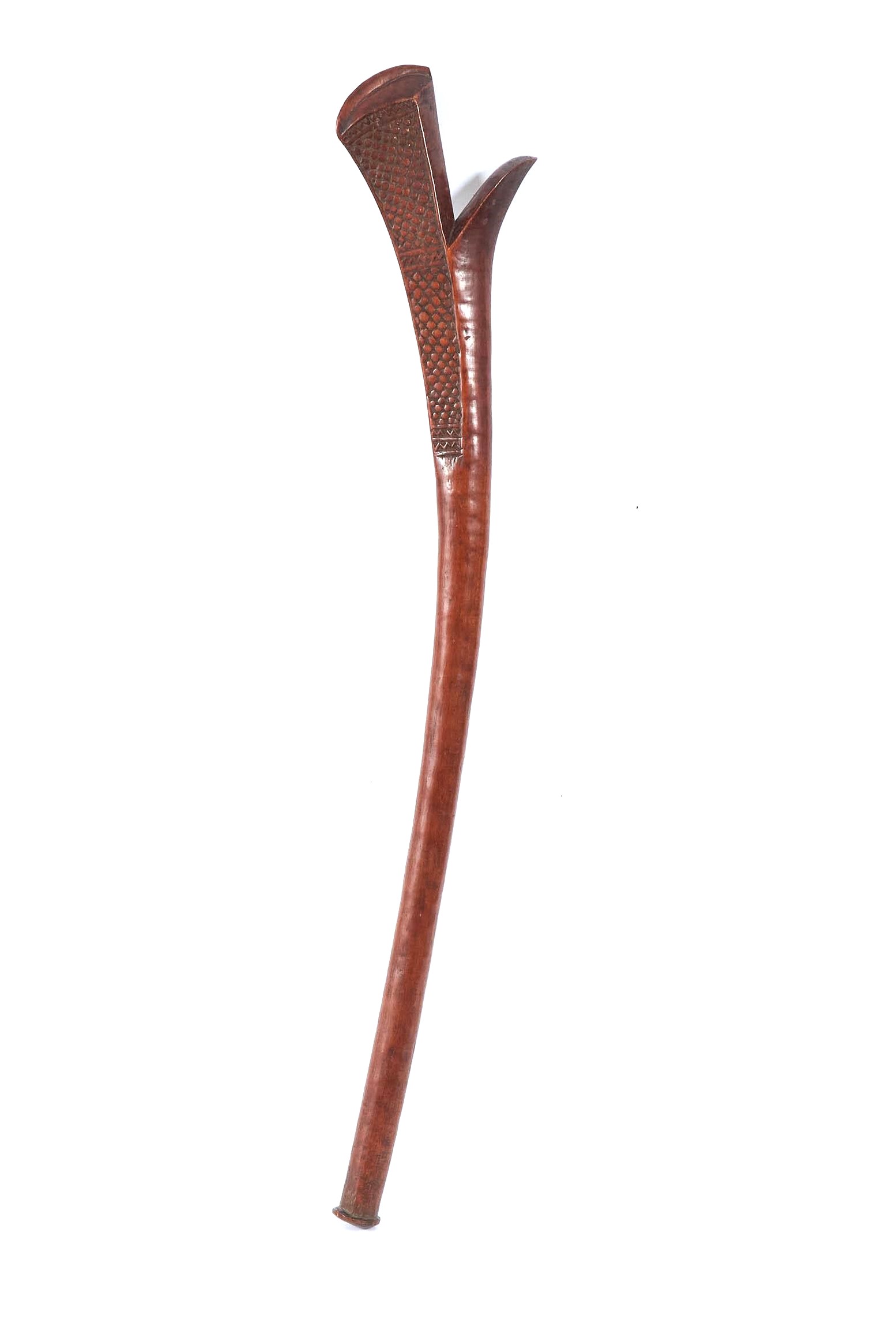
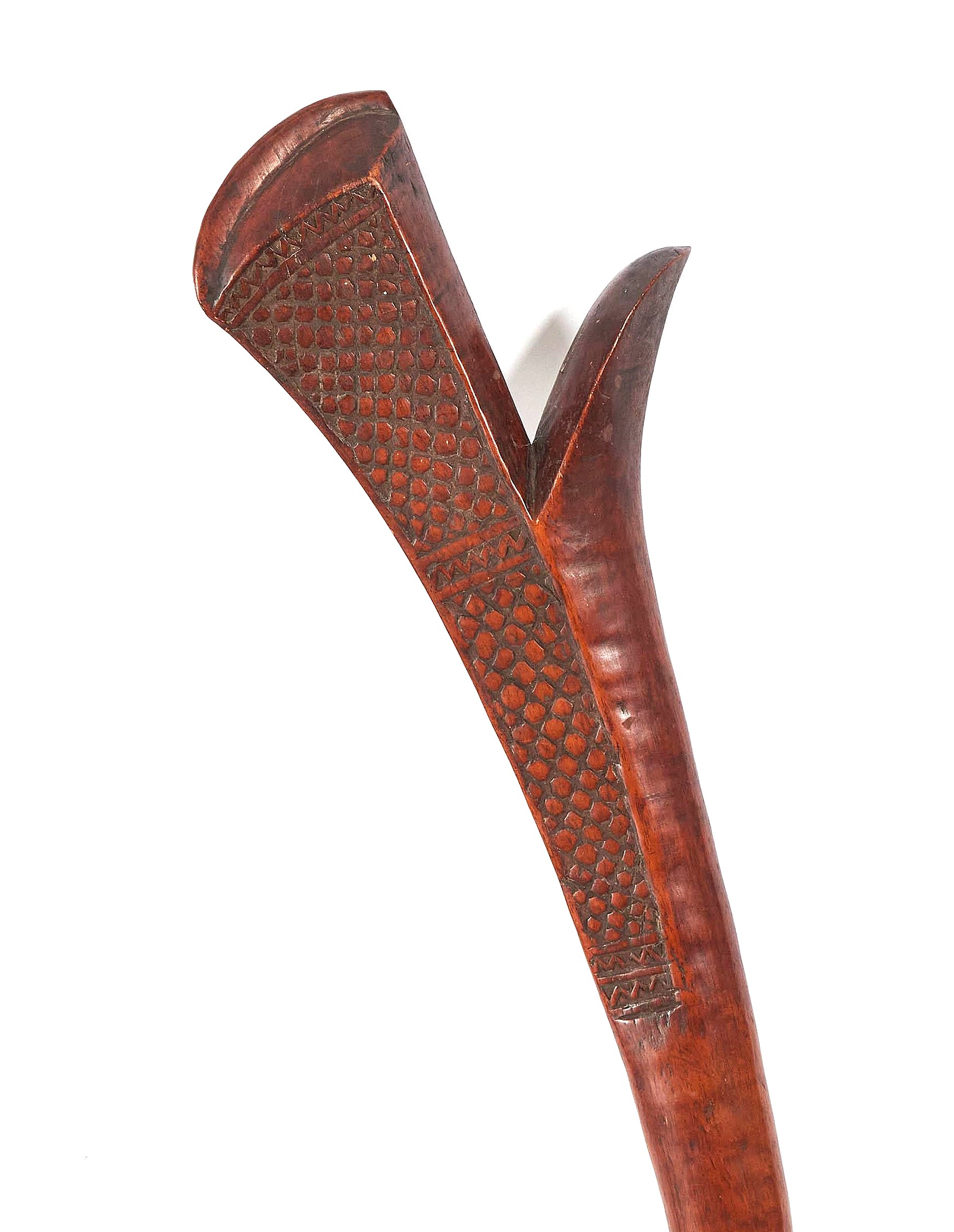
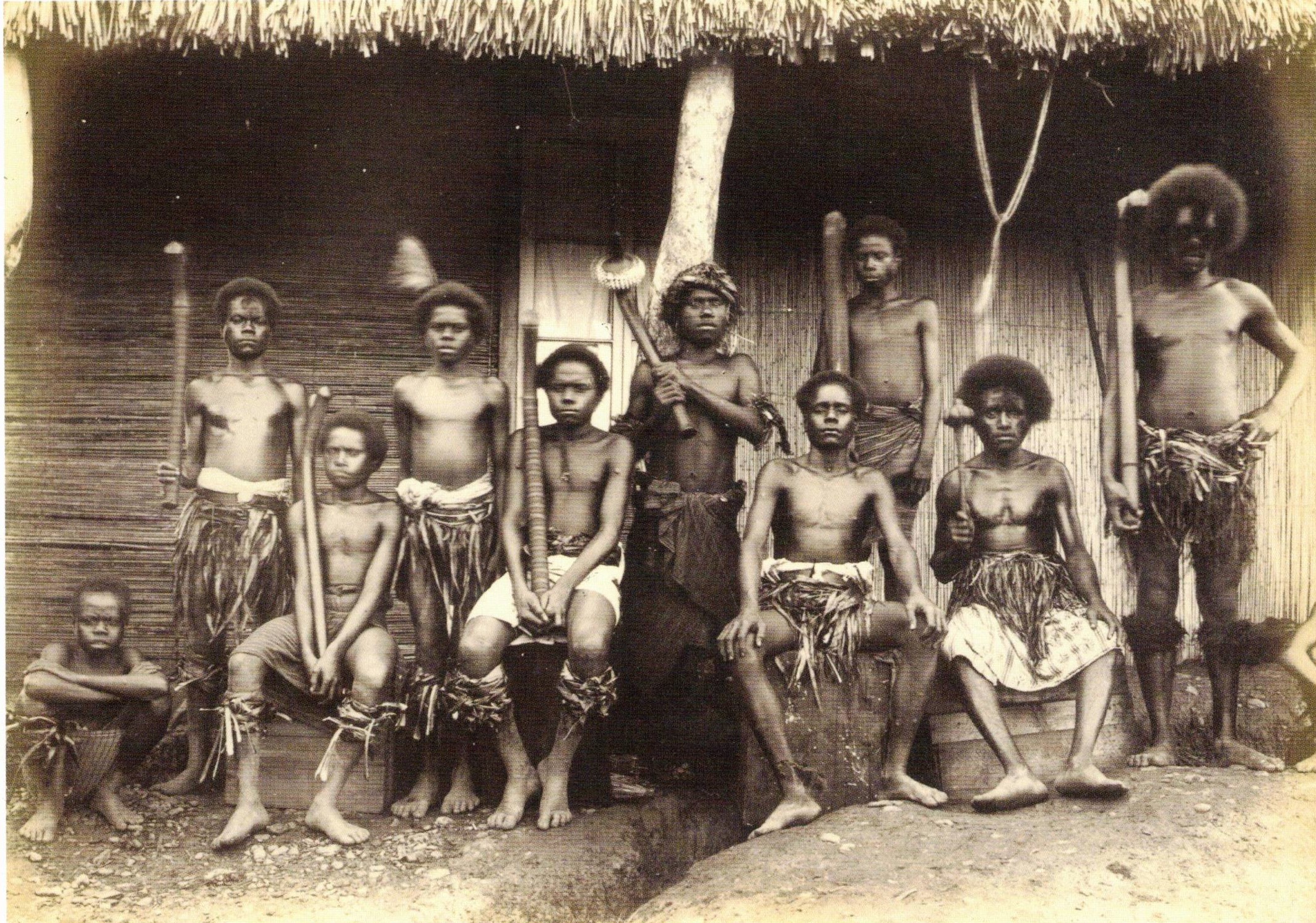
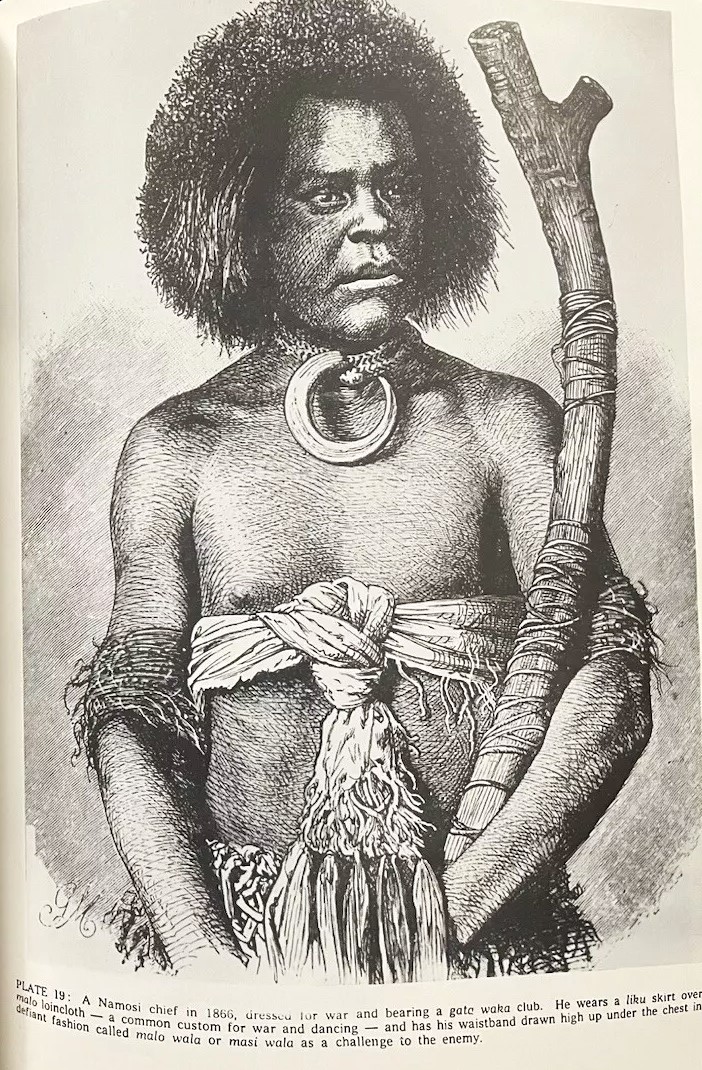

A Superb Old Fijian War Club from Polynesia, dating from the 19th Century
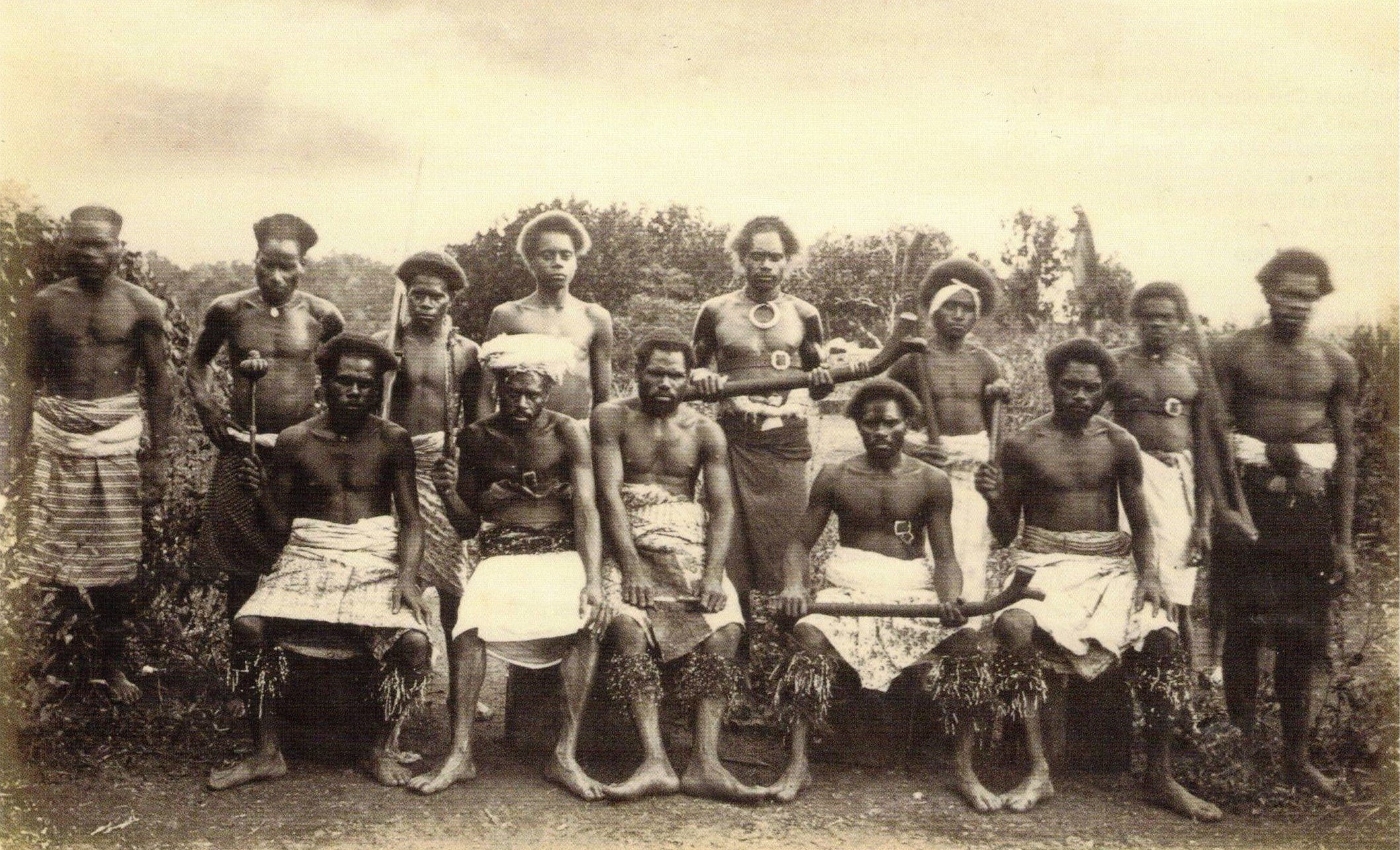
Fijian War Clubs come in many different types with different shapes & decorations. Fijian War Clubs were very important objects in the lives of Fijian men who were known as fierce warriors & sometimes cannibals in pre-contact European times. War Clubs were often family heirlooms passed through generations and were imbued with great Mana or spiritual power and also symbols of social status.
The type of tree wood called Vesi was a very specialised hardwood, and the club was also made to the size of the person who was to use it.
The Club was the Fijian warrior’s favourite weapon; he had his spears, from ten to fifteen feet long, efficient bows and arrows, and slings for throwing stones, but although these had each their special use, none approached the club in popularity and daily use. Whether his tribe was at war or at peace, a man was seldom without it, until the end of the 19th Century no Fijian man left the precincts of his house unarmed. Whenever he left his village, even to work in his garden, he carried his club on his shoulder; and should he meet a man in the path, the club remained in that position, at alert, until on friendly recognition both men lowered their weapon in greeting.
Beyond battle, these clubs were, or later became, ceremonial items reflecting a warrior’s or chief’s status (mana).
Even in times of peace, when a man had to visit a friendly village, he would not go unarmed lest the people should say, “He despises us; he comes without weapons.” He, therefore, carried a dress or token club of size and style and was enriched as befitted his rank.
The range of types and styles of the club was exceptionally wide. High degrees of skill and patient care was given to the fashioning of clubs fit for the use of chiefs; and although certain types appear to have been more in favour than others, there was ample room for personal choice in pattern and enrichment.
The spurred club Gata Waka is commonly known as the “gun-stock,” from a fancied resemblance of the spurred head to the stock of a gun, the name is, however, apt to be misleading, for there is no evidence that these clubs were, in fact, imitations of the musket or derived from it. On the contrary, their wide distribution and their high stage of development, even amongst the hill people of the interior, suggest that this was a traditional form, in use long before the introduction of firearms at the beginning of the last century. It is closely related to, but distinct from, the sali club (which has a more exaggerated, axe-like, wide head) and the kiakavo (which is generally lighter and used for dance).
This is one of the finest early Fijian Clubs I collected over the past 40 years; as most of these clubs were collected in the 19th Century, it seems reasonable that some are dated from the late 18th Century.
They all have a deep, old reddish-brown patina from handling and long use over generations
Provenance: Old Collection Australia, Circa 1880s
The Todd Barlin Collection of Fijian & Polynesian Art.
See my new EXHIBITIONS GALLERY showing the Museums and Art Galleries Exhibitions that I provided artworks for over the past 40 years. There is the link to the article about my artworks published in the prestigious Louvre Magazine in 1996
I have artwork for Museums and art Galleries but also for collectors at every stage of their collecting. I want to encourage people to explore the fine art of New Guinea & West Papua and the Pacific Islands and to be able to see and touch the artworks in a relaxed and friendly manner in my Sydney Gallery. I would like to invite you to visit my gallery and see the artworks in person and also look at my website www.oceanicartsaustralia.com where there are many Galleries & Sub Galleries to explore.
My Gallery of nearly 40 years is the last physical gallery in Sydney that specializes in New Guinea and Oceanic Art. Sydney is very close to New Guinea & the Pacific Islands where all of these amazing artworks came from, Australia’s closest neighbours.
To see many more rare items and the finest masterpieces, please make an appointment with us to visit the gallery.
For all inquiries, please contact us