
A Superb Old Nagaland Warrior Figure off a Morung Ceremonial House, Lainong Naga People Burma 19th-early 20th Century
Enquire About This Artworks >
| Collection No. | TB-4233 |
|---|---|
| Size | Height 126cm without the stand |
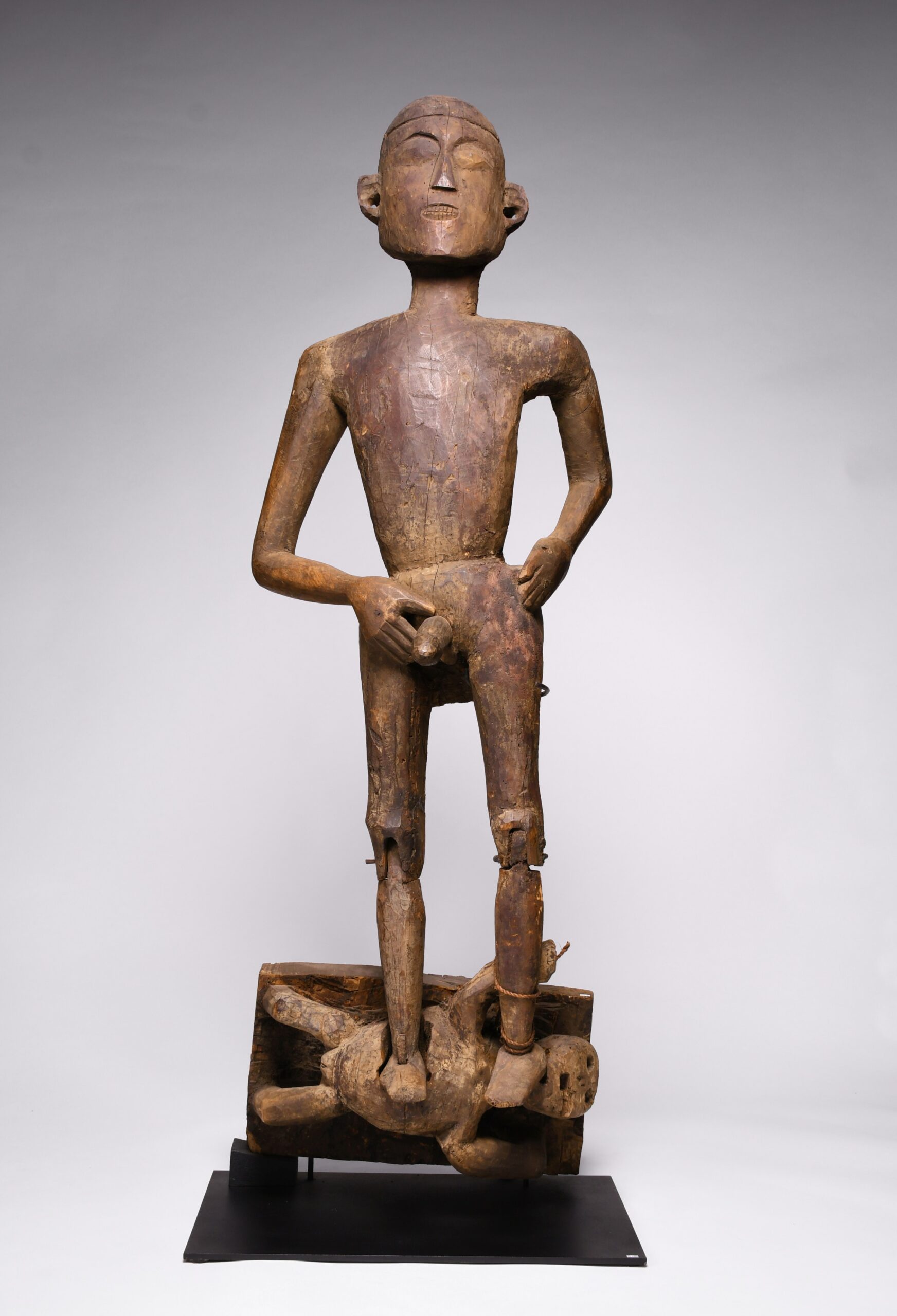
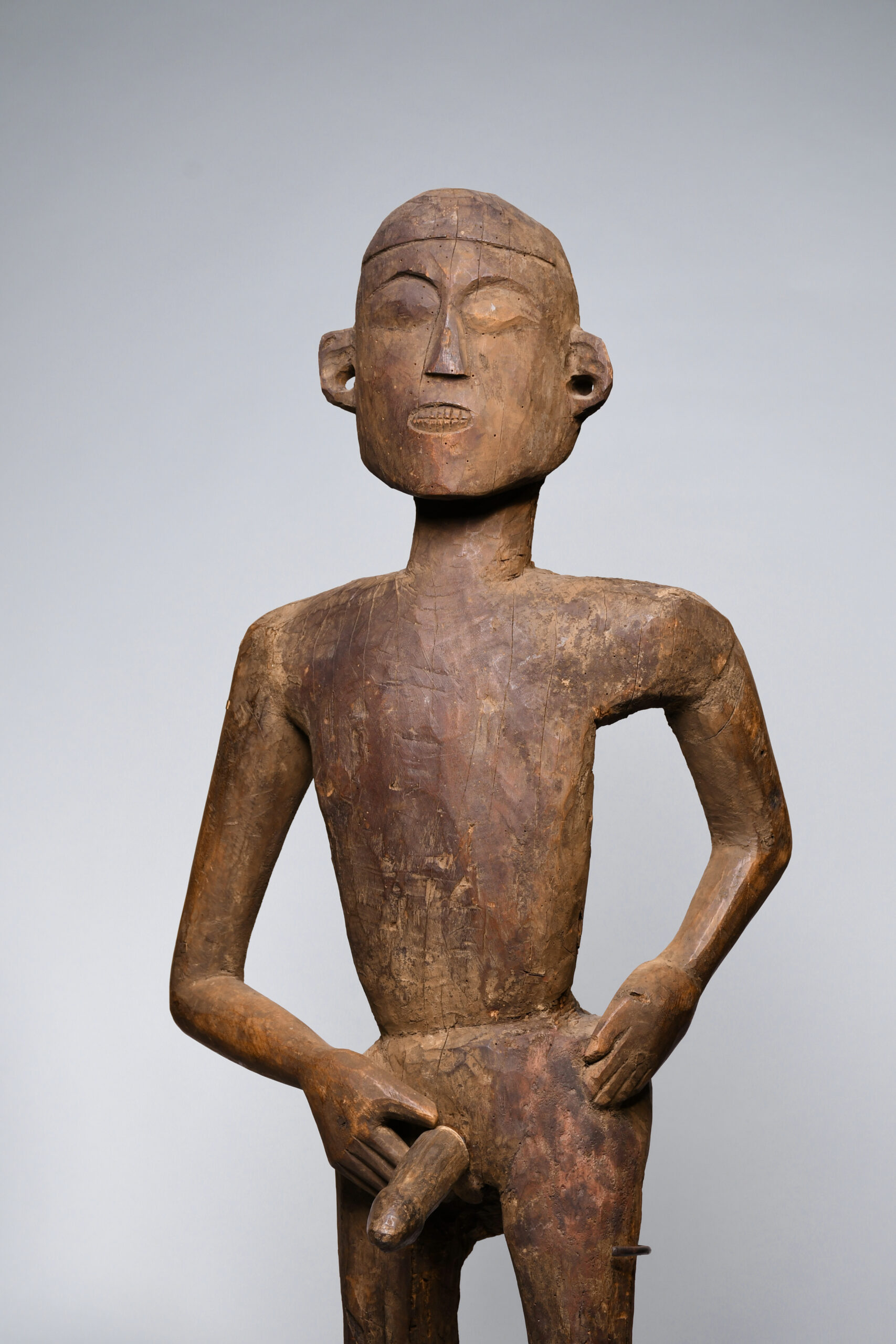
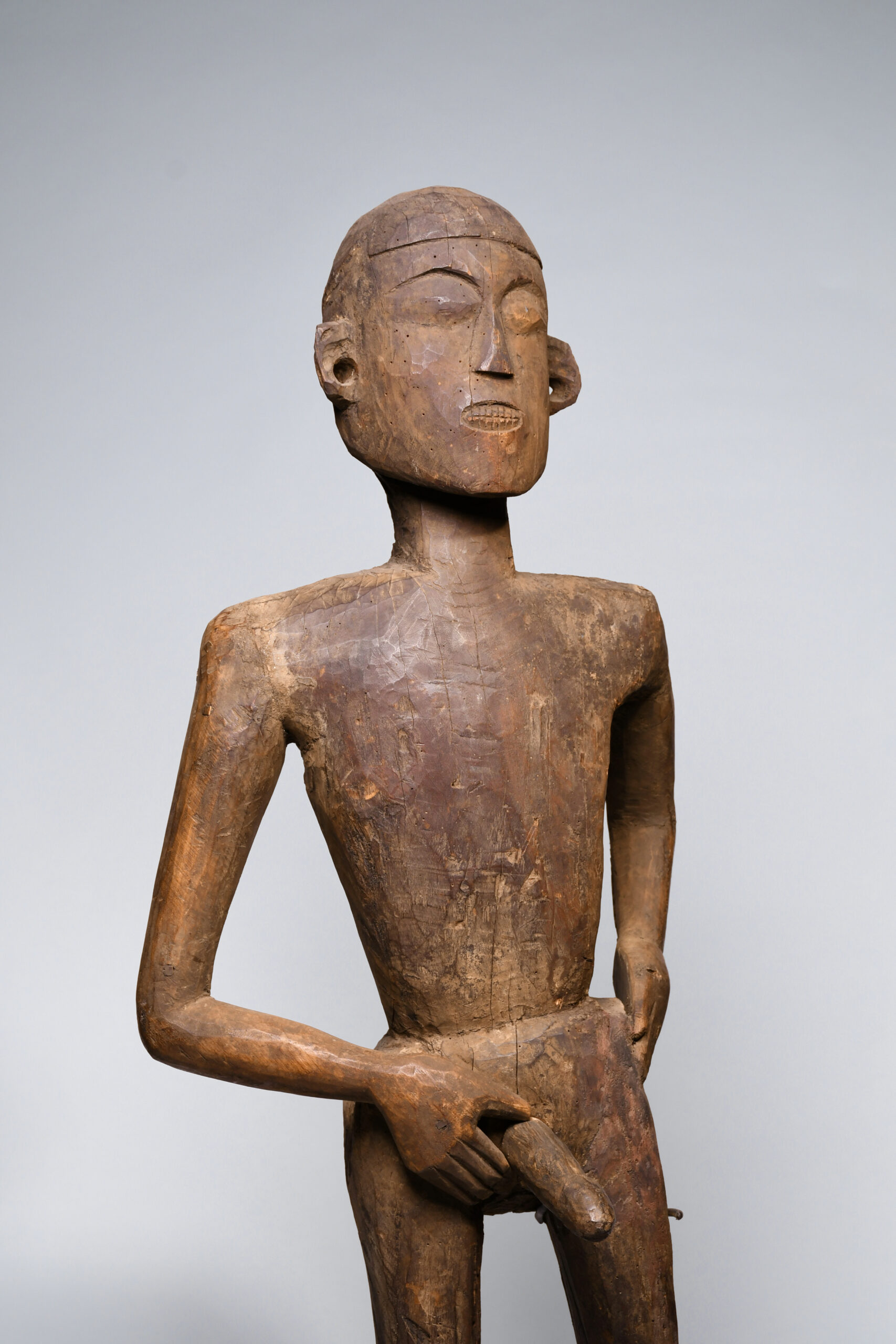
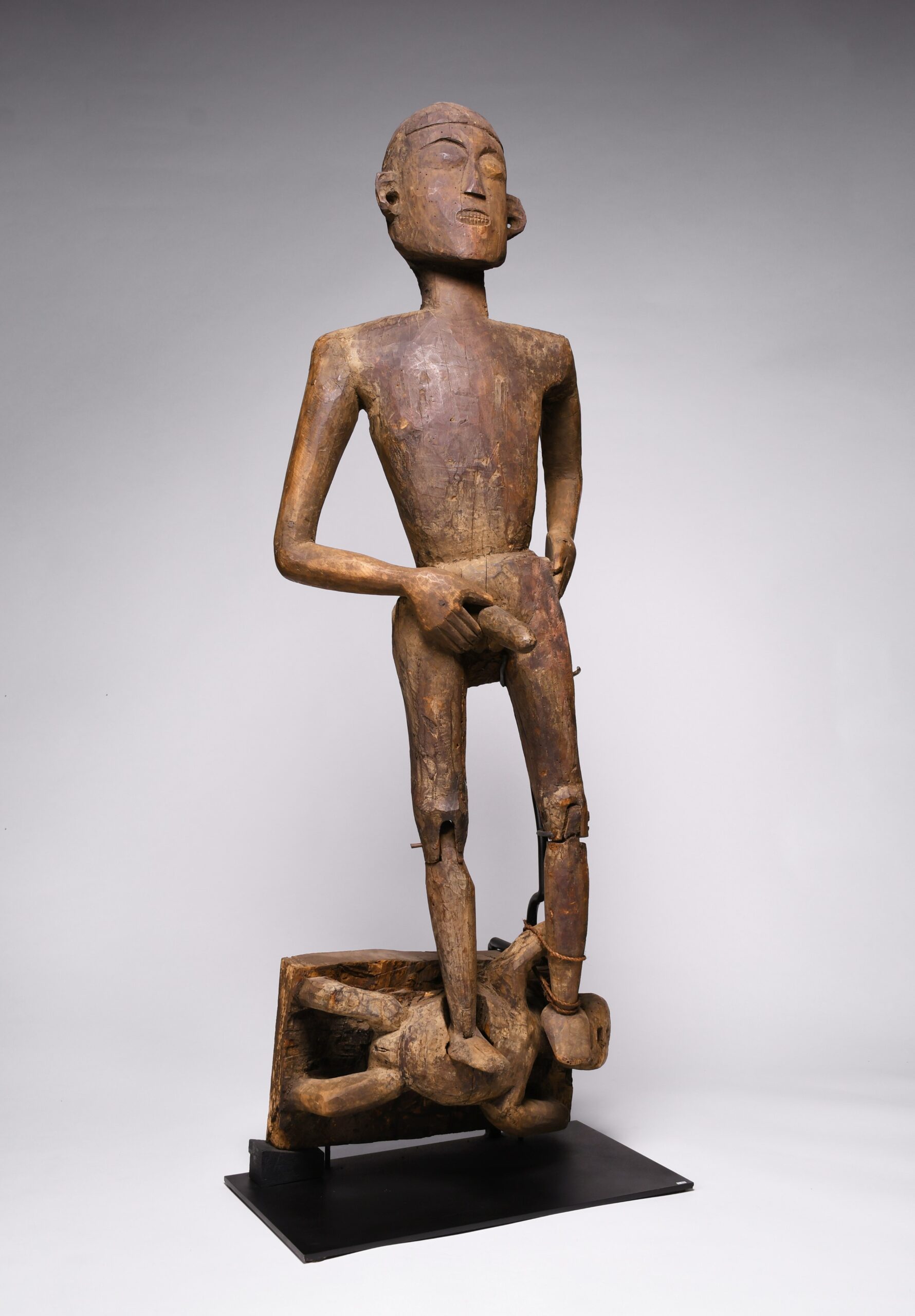
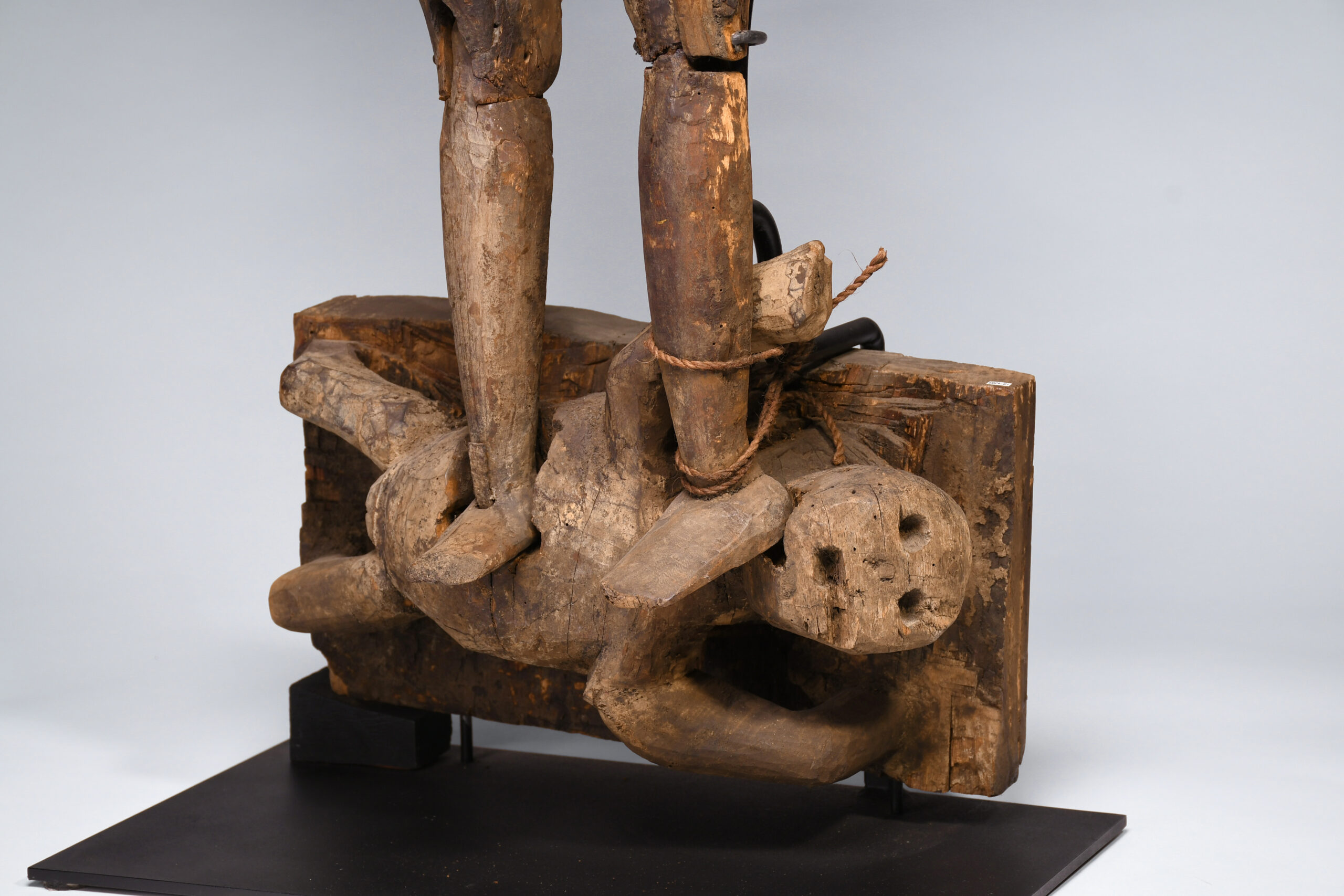
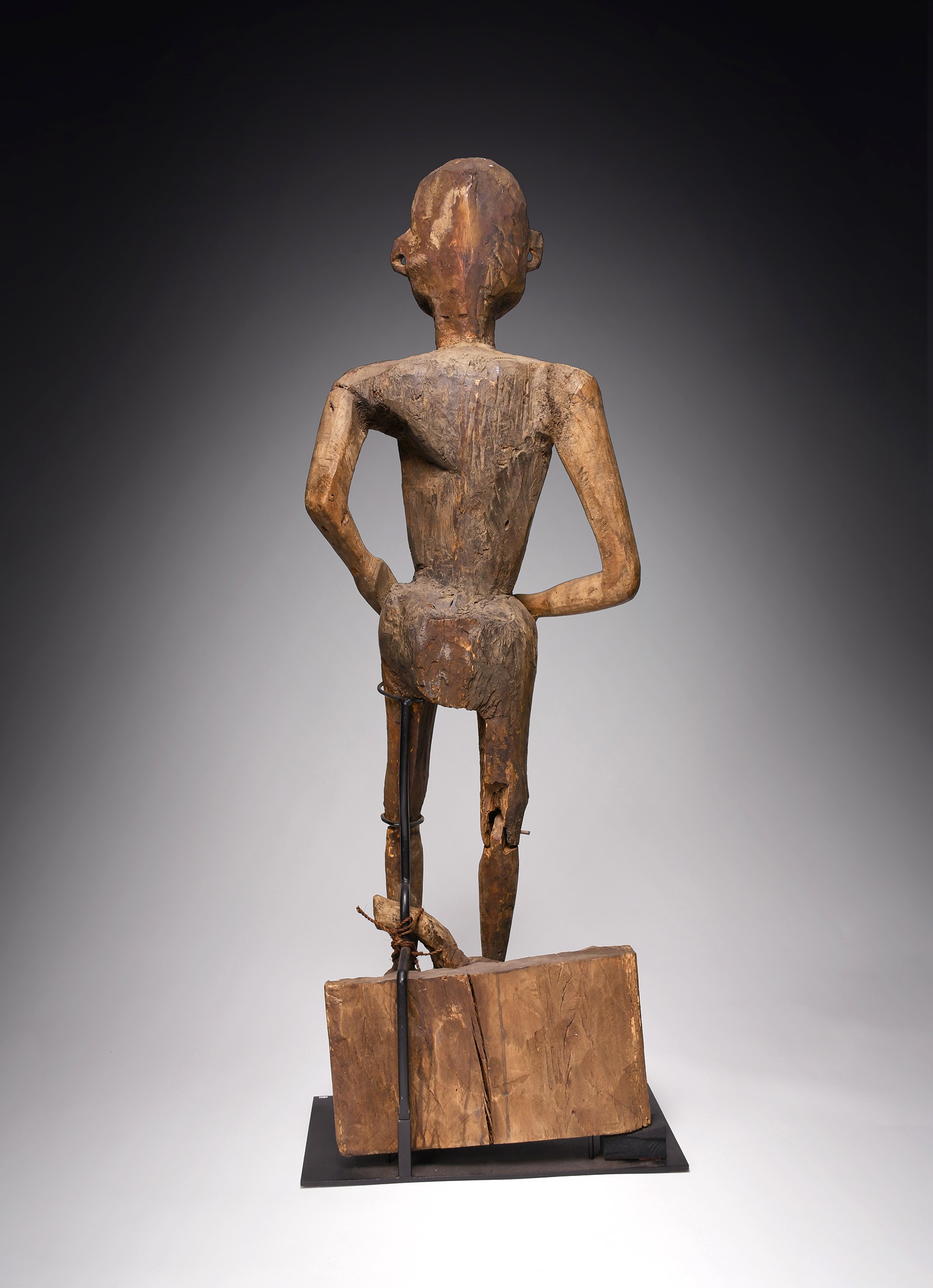


A Superb Old Nagaland Warrior Figure off a Morung Ceremonial House, Lainong Naga People, Burm,a 19th-early 20th Century
This powerful and expressive sculpture of a standing Nagaland Warrior figure trampling on a defeated enemy. This was once on the facade of the Nagaland Ceremonial House, known as a Morung. The warriors’ erect penis would have several possible meanings: the masculine aggressive aspect & fertility for their community, but also the influences from the ancient Hindu Deities like Shiva that surrounded their cultures.
The Lainong people, also known as the Lainong Naga, are a Tibeto-Burmese ethnic group that mostly resides in the Naga Self-Administered Zone in Burma (Myanmar). They are one of the major Naga ethnic groups of Myanmar, and mostly inhabit the Lahe and Hkamti Townships
The Naga people are well known for their artworks and elaborate architecture,that are at the heart of their spiritual and cultural lives.
The Morung Ceremonial Houses fulfill various functions; it is a sleeping place for the young unmarried men and in former raiding days it served as a guard-house for the warriors. Young people staying in the Morung learn about social practices and beliefs from their elders and initiation ceremonies, festivals and other rituals.
In every Morung, there is a huge wooden drum (slit gong drum) carved out of a single tree trunk. In days of head-taking, a captured head would be brought to the Morung or its slit gong, where the necessary rituals would then be performed.
The making of the slit gong drum and the building of the Morung houses with their rich decorations made the Naga famous for their wood craftsmanship. The specialist artists carve the wooden panels for the Morung house from single pieces of wood, with figures that symbolize their rituals and mythical figures, like human skulls, buffalos, tigers, lizards or head-hunting scenes like this fine old sculpture.
The tools used are simple: the Dao (machete), hand drill and chisel. Functional objects such as a husking table or dishes and small ornaments might be carved by any man, but the grand-scale carving of house-posts, grave effigies, village gates and log-gongs are done by ritual specialists or carved on special occasions.
When a new Morung is built a very large tree is cut in the forest areas during the harvest festival. The tree trunk is pulled out of the forest and up the hill with ropes. In some cases, more than 100 people can be seen pulling the ropes, and the actual journey may take a whole week.
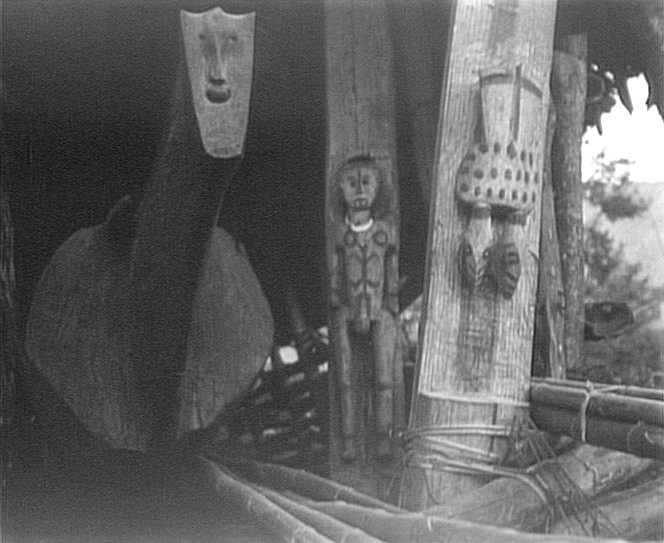
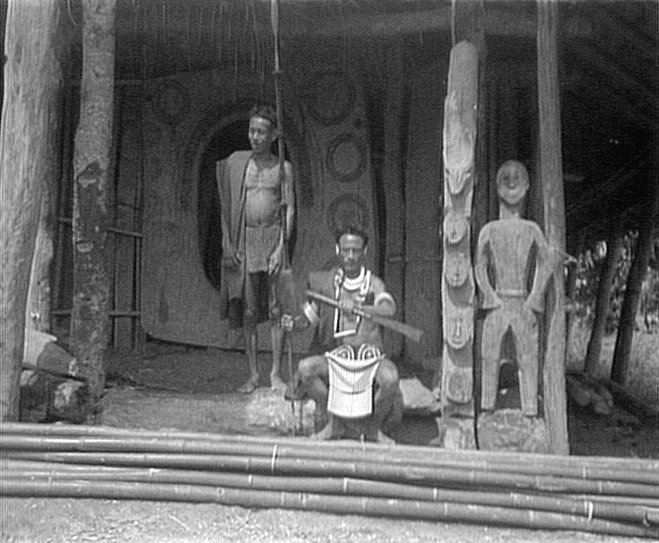
This figure was carved away from a larger architectural post as seen in photos of similar historic Morung’s buildings (below). The way that the legs on this figure are jointed at the knees was almost certainly the artist’s ingenious way of dealing with a fault in the timber of lack of remaining timber to finish the legs from the knees below.
Provenance: Old Collection USA and The Todd Barlin Collection of New Guinea Oceanic and Asian Art
See my new EXHIBITIONS GALLERY showing the Museums and Art Galleries Exhibitions that I provided artworks for over the past 40 years. There is the link to the article about my artworks published in the prestigious Louvre Magazine in 1996
I have artwork for Museums and art Galleries but also for collectors at every stage of their collecting. I want to encourage people to explore the fine art of New Guinea & West Papua and the Pacific Islands and to be able to see and touch the artworks in a relaxed and friendly manner in my Sydney Gallery. I would like to invite you to visit my gallery and see the artworks in person and also look at my website www.oceanicartsaustralia.com where there are many Galleries & Sub Galleries to explore.
My Gallery of nearly 40 years is the last physical gallery in Sydney that specializes in New Guinea and Oceanic Art. Sydney is very close to New Guinea & the Pacific Islands where all of these amazing artworks came from, Australia’s closest neighbours.
To see many more rare items and the finest masterpieces, please make an appointment with us to visit the gallery.
For all inquiries, please contact us